A Cup of Coffee and a Journey into Japanese Woodworking
So, there I was one chilly November morning, cradling my favorite mug while the steam danced in the crisp air. I had just taken a leap. No, not skydiving or bungee jumping—I decided I was going to try my hand at Japanese woodworking. You know, the kind where you use hand tools and techniques that have been passed down for generations? Yeah, that kind.
I’d seen some videos online where people were crafting these delicate, beautiful pieces of furniture with such grace. I thought, “How hard could it be?” Well, let me tell you, there are moments when I definitely wondered if I had bitten off more than I could chew.
The First Steps
I started off simple enough, planning a sake box. I figured, if I could screw up, at least I’d have a box to hold a bottle of something strong. I went to the local lumber yard, and I’ll never forget that smell—freshly cut wood mingling with the faintest hint of sawdust and varnish in the air. I picked up some beautiful, straight-grained cedar. It practically called to me. There’s something about raw wood that just draws you in, you know? Like a promise of what could be.
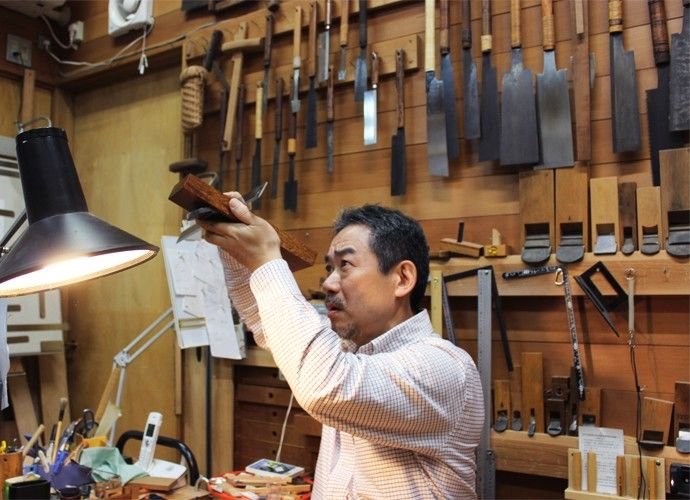
But here’s where I stumbled. Right at the beginning, I learned that I had no idea what I was doing when it came to tools. I bought some chisels that looked good—pretty shiny and all—but they turned out to be as dull as a butter knife. I could hardly make a dent in the wood. Honestly, there was a night I sat at my workbench, staring at this beautiful piece of cedar, muttering, “What am I even doing?”
Lessons Learned
I almost gave up right then. I remember thinking about how easy it would be to just order something online and forget about the hassle. But something in me, maybe stubbornness or that quaint notion of pride, kept me going. I dove into online forums and looked up videos of folks sharpening their chisels. That’s where I learned about the importance of having a proper tool—even if I had to get my hands a bit dirty and figure out the sharpening just like they did.
After a few hours wrestling with a whetstone, I finally got those chisels razor-sharp. I mean, they could slice through the wood like butter. It was hilarious! There I was, overly proud of what felt like a rite of passage—sharpening tools. The sound of that metal gliding along the stone? I swear I could hear angels sing.
The Assembly
Now, the next step was all about joinery. Japanese joinery is like this secret handshake among woodworkers. It’s all those intricate joints that hold pieces together without nails. I tried a few types and, oh boy, did I mess things up. I had a couple of joints that ended up looking like a toddler’s art project. I chuckled, trying to force the pieces together, wondering if I could just glue the whole thing.
But then, as I kept working at it, I got one of those joints to fit beautifully. I almost fell off my stool in disbelief! I mean, there’s something oddly satisfying about seeing wood pieces come together tightly like they were meant to be. They say it’s like a dance; I’d say it was more akin to a clumsy duel—me against the wood.
The Finish
Finally, after days of fussing and considering purchasing a semi-automated assembly line for my garage, I got to the finishing part. Applying oil was another experience altogether. There’s this sweet, earthy smell of tung oil that makes you feel like you’re ushering in something sacred. It took a few coats, and honestly, it felt like a ceremony. I’d rub that oil in with this old rag, feeling the wood transform beneath my hands. The color deepened, the grain popped, and I found myself whispering sweet nothings to my little sake box.
And when it finally came together, sitting on my workbench gleaming under the table lamp, I found myself just staring at it. My first taste of Japanese woodworking – full of mistakes, laughter, and triumph. I didn’t just build a box; I’d built a connection with the craft that felt real.
A Warm Takeaway
So, if you’re ever feeling adventurous—like really wanting to try something new—don’t hold back. I mean it. Dive into the unknown, even when it’s messy and daunting. I wish someone had told me sooner that every mistake just adds to the story you’re crafting. Don’t be discouraged if things go sideways. That’s all part of the learning curve.
Whether you make something beautiful or you end up with a questionable wooden creation, just take a moment to savor the process. That’s where the real magic lives. Grab that tool, get some wood, and go for it. You’ll be surprised by what you can do. With a cup of coffee at your side, you’ll discover there’s joy in both the errors and the victories.